IMPROVING
THE SELF-ESTEEM OF AT-RISK STUDENTS
By
Maria Paula Ramirez, M.Ed. and
Maria Diana Gonzales, Ph.D.
We have too many students who are at risk, and as teachers we need to help them improve their self-esteem whenever possible. Sometimes, we just do not know how to make students feel good about themselves. This article provides eight tips that we can use to help at-risk students improve their self-esteem.
#1 Smiles – Sometimes we get so overwhelmed
with the responsibility of teaching that we forget the easiest thing that will
help our students feel better about themselves….A SMILE. We start believing that we have to frown until
Thanksgiving to help discipline. But,
when we don’t smile students think that we don’t enjoy our jobs and that we do
not enjoy having them in our classrooms.
Many times, a smile will make our students’ day and will make them feel
like someone cares how they feel.
At-risk students will feel like the teacher with a smile is
approachable. They will feel comfortable
about approaching this teacher when they have bigger problems or are feeling
all alone in the world.
#2 Part of the Group – Many of our students who are
at-risk have learning challenges, can’t speak English, or can’t sit still, but
we can make them feel they are part of the group. How can we do this? If these students have problems keeping up
with assignments, find a buddy for them who will help make sure that the
students understand what is happening in the classroom. You can assign a different buddy every day,
or have students volunteer to be a buddy.
Teachers can also provide tutoring time to help these students keep up
with learning in the classroom. Don’t
forget that students will be more successful with learning if we provide
differentiated assignments. Yes, it
takes a lot of precious time to provide differentiated lessons, but our
students and their self-esteem are worth it.
#3 Meaningful Assignments – Too often we think we are doing
at-risk students a favor by providing them easier assignments than the rest of
the class. At-risk students want to
learn what the other students are learning.
Maybe, they need a differentiated assignment for them to learn, but they
can do it. You may have to provide
at-risk students with additional notes or sometimes an assignment with a
different language. Easier and different
assignments is not the answer. An
example of a meaningful assignment is giving students an opportunity to write
about their childhood. You can provide
students with Childhood Stories and Activities written by Creative Expressions for secondary students. These stories are about a young person making
the right choices to make her feel better about herself and her culture.
#4 Resources – Students need tools to make them
successful in the classroom. Many times,
we have these resources in our classrooms already. Do they need a special dictionary to help
them complete their assignments? Provide
them with one. Do they need a bilingual
student to help them understand an assignment?
Provide them with a buddy who speaks their language. Maybe, they need a special visit to a
counselor who will provide that special student with some special information
during a fifteen minute discussion.
Refer them to the counselor. I’ve
seen teachers sit students at their desk so that they can monitor their work
and eliminate distractions for the student.
If this is what it takes, why can’t we do it?
#5 Self-Esteem Activities – All activities can be connected to
learning, and sometimes, we need to have our students participate in something
that is going to make them feel better about themselves. There are some easy to follow activities that
can help students feel better about themselves.
A good example is what I call the Compliment Circle. I have students form four or five circles
with 5 students in each. Each student
gets an opportunity to give the student to his right a compliment. There is no such thing as a bad compliment as
long as it is sincere. I allow students,
especially at the elementary level, to tell a student that he likes his shirt or
her dress. I prefer more in depth
compliments at the secondary level, especially when they know each other pretty
well. A more in depth compliment is when
a student tells another student, “When students have a problem, we can always
depend on you to be a good listener.”
Another example of a good self-esteem activity is Sombrero Sentences developed by Creative Expressions on Teachers Pay
Teachers. Students get the opportunity to decorate a
sombrero, and they get the opportunity to tell their classmates and teachers
information about themselves in English and/or Spanish.
#6 Consistent Praise – Many at-risk students will say
negative things about themselves.
Teachers can turn these negative comments into positive ones. They can constantly praise the students and
remind them that they can achieve and learn.
Teachers can consistently praise students about their strengths so
students believe they can be successful in spite of their challenges.
#7 Role Modeling – Teachers can role model by
discussing their own strengths and challenges. Students sometimes see teachers as being perfect,
but they should see and hear teachers describe and explain how they have
succeeded in spite of their challenges. Teachers can also provide activities
related to other successful role models from various cultures who have achieved
great things in spite of many challenges that they faced. Role modeling of this
type can help students believe in themselves.
We think students might understand this concept if you have them read, The Geometry Lesson, a Narrative of
Unconditional Love,
written by Creative Expressions.
#8 Believe – Teachers should believe that every
single student can learn and be successful.
Educators need to avoid talking to other teachers about the students
with behavioral issues. When we talk about
other students, it is easy to label students negatively. Sometime students behave negatively because
they are desperate for attention. Believing that students can succeed means
that we have to engage in reflective thinking ourselves to identify
misconceptions and stereotypes we might hold. Identifying those beliefs allows
us to change them. Once those misconceptions and stereotypes are changed, we
firmly believe that every student can achieve to their utmost potential. Guess
what….they do!
Self-Esteem
activities are important in the classroom. There are many great self-esteem
activities to help students improve in this area. Teachers can definitely help students improve
their self-esteem by smiling at students and making them feel part of the
group. Providing students with
meaningful assignments and resources are very important to help students feel
better about themselves. However, if we don’t believe in their ability to learn
and succeed, then how can we expect them to achieve their dreams? Hopefully,
you will find these eight tips useful in your classroom so that improving
students’ self-esteem can become a daily activity in all of your classes.



 Catharyn of Sol Azucar TpT store has taught High School Spanish I, II, and III for the last six years. She learned Spanish growing up in Arizona and studying abroad in Valencia, Spain and Santiago, Chile. Catharyn has worked, volunteered, and traveled all over the Spanish-speaking world.
 Rob, a New Zealander, and Angelica, a Chilean, are the teacher-authors of Woodward Education. They have owned a language school in Chile since 2002. They started creating materials for their own children and ended up creating materials for the school.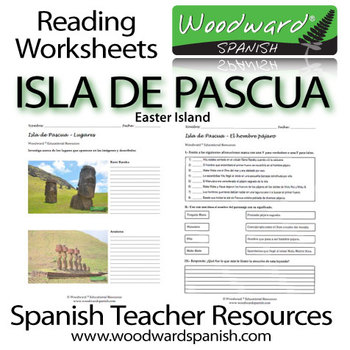

 Happy Greetings to Ashleigh Mathew, the teacher-author of The Kindergarten Kitchen from St. Louis, Missouri.
 Her presentation for parents in English and Spanish is a wonderful resource to have if you have Spanish speaking parents in attendance.